
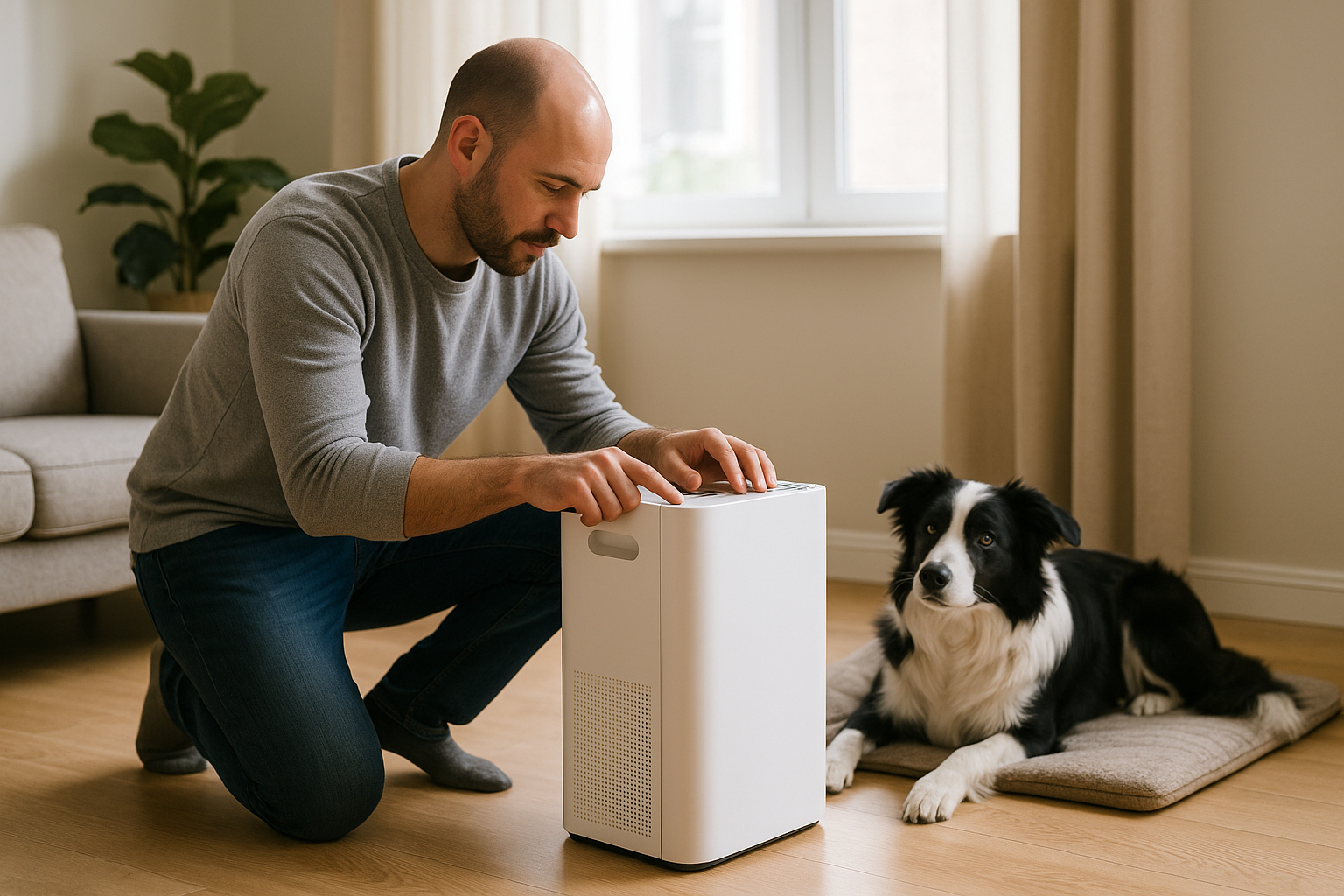
Indoor air quality is often overlooked when it comes to pet care, but for dogs who spend most of their time indoors, the air they breathe plays a crucial role in their health and comfort. Dust, odors, cleaning chemicals, and even moisture levels can affect your dog’s respiratory system and overall well-being—especially if they have allergies, sensitivities, or are in their senior years.
While you may not see the effects immediately, poor indoor air quality can lead to chronic issues such as sneezing, dry eyes, skin problems, or even behavioral changes due to discomfort. Fortunately, maintaining clean air doesn’t require a complete home overhaul. With small, consistent habits and some simple tools, you can ensure your dog is breathing cleaner, healthier air every day.
In this article, you’ll learn how to assess and improve the air quality in your home in ways that directly benefit your dog—without adding stress to your routine.
Why Indoor Air Quality Matters for Dogs
Dogs breathe faster than humans, meaning they inhale more air (and pollutants) per minute. Unlike us, they are also closer to the ground—where dust, chemical residues, and mold spores tend to settle. Over time, even mild exposure can trigger or worsen symptoms.
Common symptoms linked to poor indoor air quality:
- Itchy or watery eyes
- Sneezing or nasal discharge
- Skin irritation or scratching
- Respiratory noises (wheezing, coughing)
- Lethargy or avoidance of certain areas
Breeds with short snouts (like Pugs, Bulldogs, or Shih Tzus) are especially sensitive, as are puppies and elderly dogs.
What Pollutes the Air Inside Your Home?
Understanding what contributes to poor air helps you fix it. Common sources include:
- Dust and dander from pets, furniture, and floors
- Household cleaners with strong chemicals or artificial fragrances
- Cooking fumes and smoke from stoves or ovens
- Mold or mildew in humid or damp areas
- Scented candles or air fresheners
- Poor ventilation in rooms with closed windows or no airflow
Even seemingly clean homes may have invisible air issues if not ventilated or maintained properly.
Signs Your Dog May Be Affected
Dogs can’t describe what they feel, but their body language speaks volumes. Watch for:
- Frequent licking of paws (may indicate airborne irritants)
- Scratching at ears or face
- Preferring one room over another
- Avoiding resting on the floor in certain areas
- Sudden changes in energy or appetite after cleaning sessions
If you notice these signs consistently, the air may be contributing to the discomfort.
How to Assess Indoor Air Quality Without Special Equipment
You don’t need a monitor to get started. Use these easy checks:
- Odor test: Walk into your home after being outside. If you notice a musty, chemical, or stale smell, it’s likely affecting your dog too.
- Sunlight test: When sunlight enters a room, do you see particles floating in the air? This indicates airborne dust.
- Vent test: Place your hand near air vents. Weak airflow or dust build-up means reduced air circulation.
- Humidity test: If mirrors or windows fog often, humidity might be too high—ideal for mold and mildew.
These clues help you decide where to focus cleaning and improvement efforts.
Daily and Weekly Habits That Improve Air Quality
1. Open Windows Briefly Each Day
Even in cold weather, open windows for 10–15 minutes to let fresh air in. This replaces stagnant air and removes lingering odors or moisture.
2. Clean Vents and Fans Monthly
Wipe down fan blades and vent covers to prevent dust recirculation. Replace or clean HVAC filters as recommended.
3. Avoid Chemical Cleaners
Switch to pet-safe, unscented cleaners made from vinegar, baking soda, or natural enzymes. Avoid strong sprays or scented mops.
4. Vacuum Frequently
Use a vacuum with a HEPA filter to remove fine particles. Focus on areas where your dog sleeps or plays.
5. Wash Bedding Regularly
Dog beds, blankets, and soft toys collect allergens. Wash at least once per week using unscented, gentle detergent.
6. Use a Dehumidifier in Damp Areas
Basements, bathrooms, or laundry rooms with poor airflow can trap moisture. A dehumidifier helps prevent mold.
Simple Tools to Help You Monitor and Improve Air Quality
1. HEPA Air Purifier
Place one in the room your dog spends most time in. Look for units rated for pet dander and small-particle filtration.
2. Indoor Air Quality Monitor
These devices track humidity, particle levels, and VOCs (volatile organic compounds). Many now connect to apps for easy tracking.
3. Houseplants
Pet-safe plants like spider plants, Boston ferns, and areca palms help clean the air naturally. Make sure to avoid toxic species.
4. Humidity Monitor (Hygrometer)
Ideal indoor humidity is between 40–60%. Use this tool to adjust with a humidifier or dehumidifier as needed.
What to Avoid for Better Air
- Scented candles and wax melts
- Incense or heavy essential oils
- Carpet powders or sprays with synthetic fragrance
- Overuse of diffusers (even with pet-safe oils)
- Smoking indoors
- Letting dust accumulate under furniture
Your nose may adapt to these irritants, but your dog’s stronger senses won’t.
Final Thoughts
Clean indoor air is one of the most overlooked parts of your dog’s daily health, but it’s also one of the easiest to improve. By making a few conscious choices—like using natural cleaners, increasing ventilation, and monitoring for signs—you create a more breathable, safe space for your pet.
You don’t need expensive equipment or drastic changes. Just a daily habit of awareness, cleanliness, and fresh air can protect your dog’s respiratory system and overall comfort in powerful ways.